• Skip to primary navigation
  • Skip to main content
Uphill Books

Uphill Books

Movement Matters

Uphill Books

Movement Matters

  • Home
  • About
    • Mission
    • Team
  • Books
    • Our Books
    • Audiobooks
    • Translations
  • Contact Us
    • Media
    • Authors
    • Submissions
    • Librarians
    • Distribution

admin

Eat Well, Move Well, Live Well Cracker Recipe for National Bake for Family Fun Month

February 8, 2019 ·

Galina Denzel, co-author of Eat Well, Move Well, Live Well, knows a lot about nutritious eating. She creates fresh recipes for each month’s unique theme through their program at eatmovelive365.com! February is National Bake for Family Fun Month, so we have a cracker recipe from Galina to share that is both nutritious and fun to make.

Perfect Crackers
It may sound less than humble, but these have crunch, flavor, and protein and provide a solid base for a spread or mini hipster toasts—who wouldn’t call these perfect?

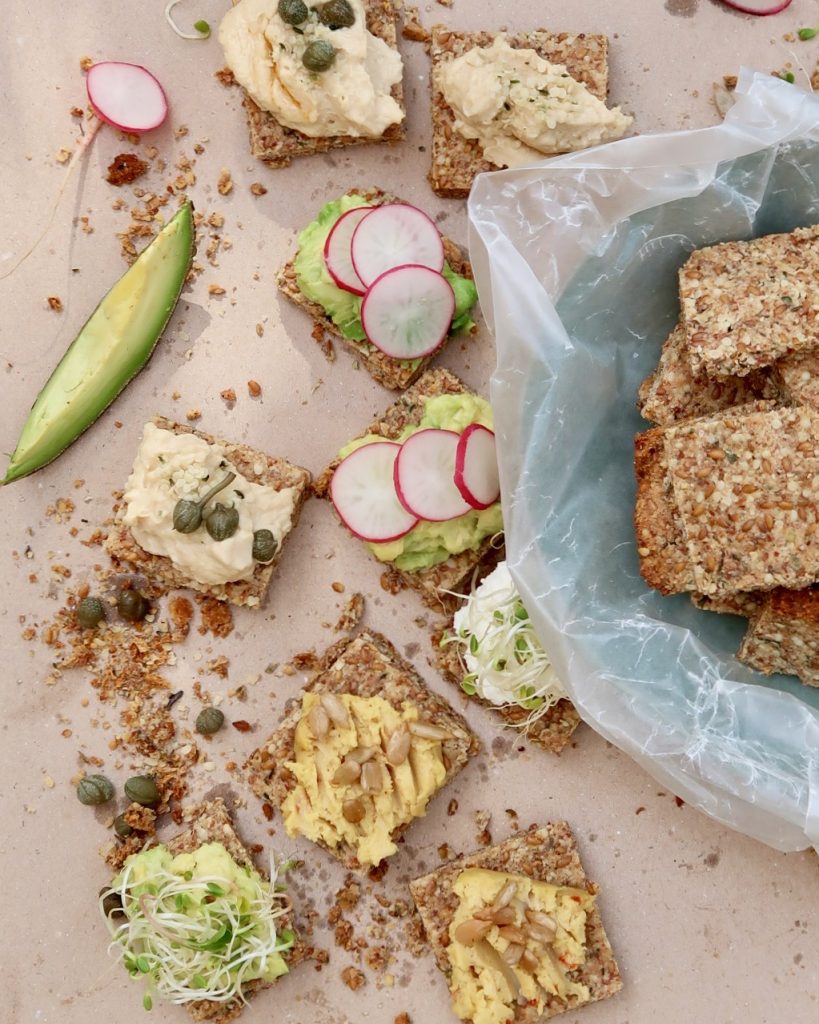
In the pictures we have served them with avocado, hummus and cashew cheese, ricotta and sprouts, but please make them your own and make your own stunning delicious display! These also work great to take to work as snacks and are easily portable for hikes and outings.
For 4-8 servings
1/2 cup flax seeds, ground
1/2 cup flax seeds
1 cup water
1 cup unbleached almond meal
1/2 cup hemp seed
2 tbsp olive oil
1/2 tbsp sea salt
1 tsp dry oregano
1 tsp dry thyme
Substitute your own choice of herbs for different flavors

Directions
Start by mixing the flax and water and let it sit a while—an hour minimum, but overnight is best. The flax will soak up the water perfectly. Combine the other dry ingredients: hemp, almond, sea salt, and dry spices, and add olive oil. Use your fingers to work the ingredients
together into a thick paste. Combine with the two kinds flax, soaked from before. Once you have your mixture, spread and press into a non-stick baking dish or cookie sheet and cook at 360F for 25-30 minutes or until golden. The thickness should not be more than 5 mm. When you pull them out of the oven let them rest until cooled and cut carefully so they don’t
crumble. Enjoy the lovely crisp end pieces! You can serve these as they are or with dips and spreads on top. I imagine they last long in a cool dry place, but we never let them sit around more than a couple of days.
National Green Juice Day

January 25, 2019 ·

January 26 is National Green Juice Day! Get the most from the day with this advice from Galina & Roland Denzel, authors of Eat Well, Move Well, Live Well.

We see more and more of our readers and students opt for a green drink in the morning. The reason? Convenience for most! It’s much easier to tip back a delicious liquid while putting one shoe on and sending a child out the door to school than sitting with a crunchy spinach and kale salad, isn’t it? While there is nothing inherently “bad” in a green drink, here is how to ensure you make the most of your green habit:

  1. A green drink is not a complete meal. While electrolytes and water abound in green drinks, sodium and potassium will only get your body going so far. A complete meal for an average size female may contain 500-700 calories with a combination of protein, healthy fats, and carbohydrates, including fiber. A green drink, even when large, will provide mostly carbohydrate in the form of simple sugars, no fiber and none of the other macronutrients. Consider having your juice and still adding protein, healthy fats, and fiber to create a complete meal.
  2. Remember to chew. Juice is extracted from an actual plant, and before juicers came around, we relied on our teeth to get the liquid from inside the plant cells. This allowed time to mix the food with saliva, and since carbohydrate digestion starts in the mouth, the process of carbohydrate breakdown could begin properly. When we drink juice, there isn’t enough time for saliva and carbohydrate to mix, so it’s key to remember to “chew” your juice. Hold and swish it in your mouth for a while before swallowing.
  3. Chew other food. Chewing is key for keeping your teeth and jaw healthy, mineralizing bone and exercising your facial muscles. If you drink all your vegetables, you are missing on the natural movement of chewing –often wanting to catch up with crunchy foods like chips and pretzels – which make the loud noises you are missing, too! Believe it or not, making noise is a part of the food experience and we do miss it! If you don’t want to have one of those days that starts off with a green drink and ends with a bag of chips, remember to have enough raw and cooked veggies at your other meals and keep juice as a special occasion a few times a week or when you are really in a hurry.
  4. Make your own juice if you can. It takes effort and time to select, wash and juice your own veggies: I like to mix kale, spinach, green apple, celery, cucumber, lemon, ginger, turmeric, and a bit of pineapple. There are several benefits of doing this. First, you have complete control of the quality of the veggies, how they are grown and washed. This keeps your juice clean and free from contaminants, as well as parasites and viruses that can hop on food when it’s not properly handled. Washing, chopping and juicing gets you to
    touch and get in contact with your food – leading to better digestion, connection with the food, and satiety. The process of mindful eating starts well before we’ve taken the first drink. Last but not least, the physical work that it takes to wash and cut the veggies and fruit is movement our bodies need and can use – so many of us feel the effects of a sedentary lifestyle, and outsourcing juicing to someone else means missing out on a great movement opportunity.
  5. Discard of your pulp in a smart way. I have friends who work it back into meatloaf or creamy soup in order to increase their fiber content or even make dog treats. We use juice pulp to feed our worms in the worm compost outside. They say they love it!

Take a walk on the range

April 13, 2018 ·

Guest post by Dawn Again author Doniga Markegard

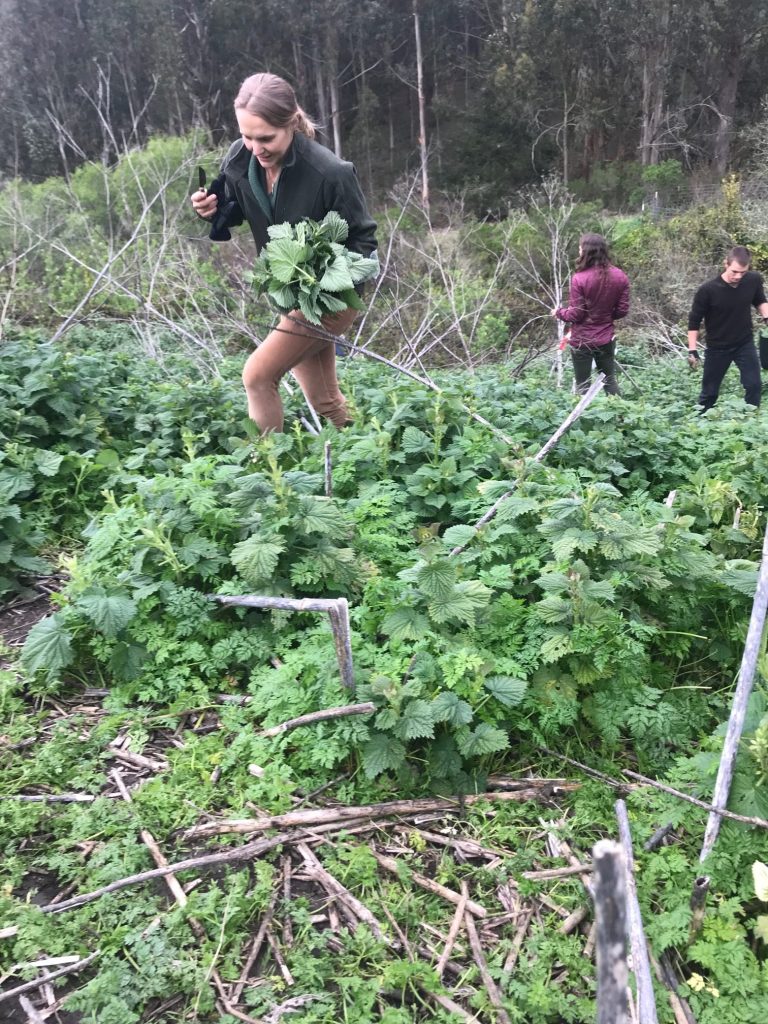
Just outside my front door there is a field of stinging nettles the size of half a city block. It is the healthiest plot of nettles I have yet to see.

It was not always that way. There was an old barn on the hill above, that once was a milking barn and then held moonshine during prohibition. The activities in the barn helped pay the mortgage on the ranch and supported the growing family of settlers. When my husband arrived on the ranch the barn was falling down, due to lack of maintenance. The new owners made money elsewhere and simply used the ranch as an escape from the modern day stresses and routine.
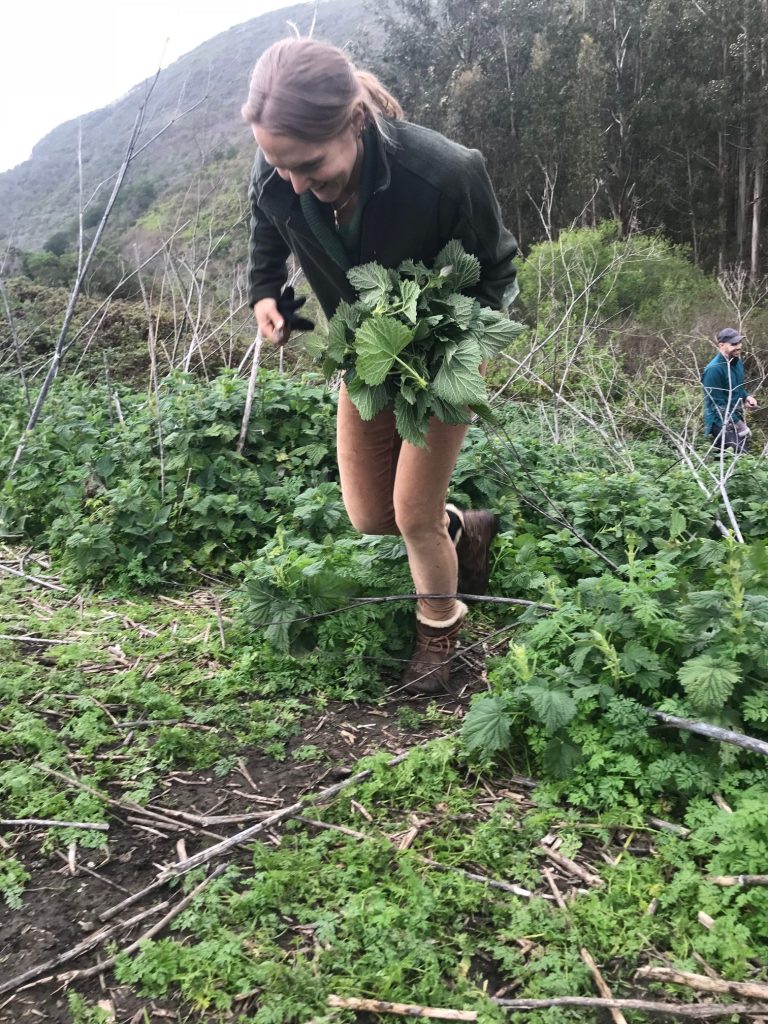
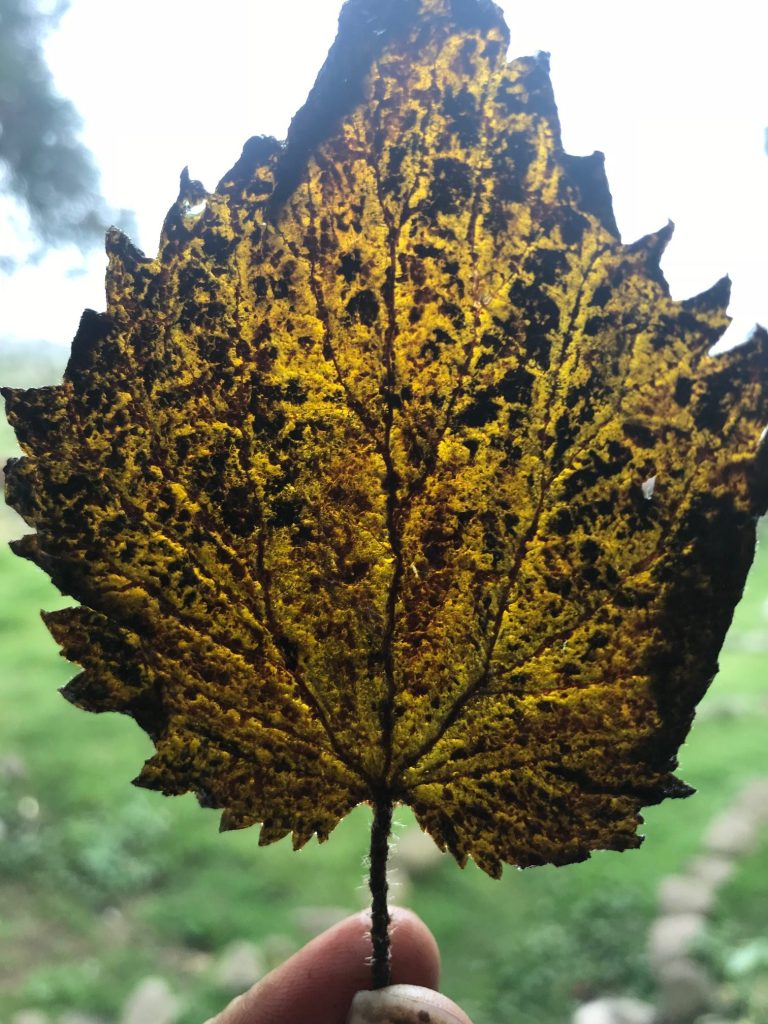
The barn was bulldozed into the ground. Remnants of the roaring Twenties and a family of farmers making a go at life in California would soon turn to dirt. That dirt would then be fresh breeding ground for seeds that were carried along the coastal winds, dropped by birds as they migrated or a fox as he marked a territory. The seeds that lay in the freshly disturbed earth were not those that dominated the surrounding grasslands. They were seeds that some call the name forbidden to utter in some circles, the dirty word that many groups dedicate themselves to seek out and conquer: Invasive Species.

Poison hemlock, ripgut brome and medusahead all are icing on the cake of the conqueror. As these species drift around the world, looking for an opportunity to propagate, we have a choice to view them as a problem or an opportunity. So when the dirt became home to Italian thistle and poison hemlock, we put in the pigs. In nature, waste equals food, so if we are to mimic nature, everything eats and is eaten. When we want to sculpt our lives and our landscapes, that basic principle can help us avoid dissonance. The pigs did what they do: eat everything. They ate the roots of the plants because we let them stay long enough to feast on the starchy taproots of the thistle. Then we moved them off and let the ground rest and recover from the disturbance.

Winter set in, and soon a diversity of plants began to establish in the pig fertilized and disturbed earth. We did not spread any seeds, just waited and watched as the drifters found a settling place amongst the diversity and chaos. The result is a field of stinging nettle that is so healthy that the top leaves are the size of my hand—despite the drought—rivaling those of the Pacific Northwest, where everything is greener and bigger. So when life brings us stinging nettles, what more are we to do than to eat, a basic behavior we share with all life on earth. The act of gathering, preparing food and then the celebration of eating helps us to tap into that familiar comfort of not only surviving, but thriving.

Each species has a role and once we begin viewing this diversity as something to celebrate rather than select, isolate and destroy, the better off our lives and landscapes will become. The ranches on which our livestock graze support 66 species of birds and 157 species of plants. In all this diversity there is food being grown. How we tend to that food source is up to each and every individual. For our family, in spring, an abundance of stinging nettle means it’s time to make stinging nettle chips!

Recipe: Stinging Nettle Chips

Ingredients:

Top 3 or 4 sets of leaves of the stinging nettle plant before they flower in the early spring

Olive Oil

Apple Cider Vinegar

Nutritional Yeast

Sea Salt

Instructions:

Harvest the nettle, be creative, collect as many as you can. See page 211 of Dawn Again to learn how to harvest without gloves. I also recently worked with my daughter Quince and I held a bag under the plant while she carefully cut the leaves with scissors. Enjoy the adventure of interacting with the plant.

Find a bowl large enough to fit all the nettles. Pour in the olive oil and vinegar about 3 parts oil to one part vinegar. Stir in the nutritional yeast until you have a slurry. Add in a couple pinches of salt to taste. Set all the trimmed leaves of the stinging nettle as well as the top group of leaves that form a bud. With a wooden spoon gently massage the oil mixture into the nettles until they are thoroughly coated. Pour in more oil as needed to coat the nettle. Take your time with this, part of the process is to massage out the stingers. Don’t tear the leaves, just work the oil into the surface. You know when it is ready when you pick up a raw nettle leaf, eat it and it does not sting your tongue. When you taste it, go through a sense meditation before you place the leave on your tongue. Then use your intuition to add more salt, fat or acid to the mix. See page 60 of Dawn Again for sense meditation. Preheat the oven to 300 degrees and place the nettles flat on a cookie sheet. Cook for about 20 mins, turning half way through until the leaves are crisp but not burnt.

Spring loaded

March 25, 2018 ·

As a company of book lovers, we equate any change in the season with an opportunity to talk about the books we are reading, planning to read, or have recently read. Here in the northern hemisphere, spring is springing, bringing days of longer light, chirpier birds, and a feeling of excitement about the coming weeks and months of warmer weather and beach days.

But let’s not get ahead of ourselves.

For me, any spring read is one I can take out into the garden with me, but since I live on the east coast of Canada, and spring is being quite pokey this year, I have to content myself with reading near a big window, supervising the slow melting of the snow that currently covers my garden. To that end, there are a couple of old gardening books my parents, both avid gardeners, passed down to me. I page through them every early spring, dreaming of getting my hands dirty when the big melt finally comes. I’m also digging in to Baseball Life Advice by Stacey May Fowles as that season once again heats up. And lately I’m finding I really want to prioritize the voices of women. To that end, Penelope by Sue Goyette always has a place on my shelf, as does anything by Alice Munro, in this case the amazing Hateship, Friendship, Courtship, Loveship, Marriage. And I’m loving dipping into Startle and Illuminate, a book of writing advice from Carol Shields.


Rounding out this stack are reference books that feel luxurious. I want to eat everything that Deb Perelman cooks, so I love reading—and cooking from—her book Smitten Kitchen Every Day. The Hidden Lives of Trees I am slowly making my way through, a pace I’ll likely pick up as the leaves return outside my windows. And then there is Lists of Note, a perfectly odd compendium of lists by people like Sylvia Plath and Jack Kerouac, Edith Wharton and Captain Beefheart. As a lifelong lover of lists of all kinds, I am infatuated with this book. The thing about lists is that they can reveal much more than mundane details—everything from love to grief, to writing advice, to notes on how to be a good person are detailed here. And finally, an Italian translation of The Little Prince, by Antoine de Saint-Exupery. I don’t read this one so much as dream of being able to read it. Still, I like to open it and practice my pronunciation and challenge my comprehension.


Publisher and author Katy Bowman‘s stack


What are “spring reads”? To me they are those books that are grounded in the season OR they are books that help you do some deep cleaning. I read Animal Vegetable Miracle every year as I try to remind myself why I want to get out in the garden. Gathering Moss, Mind of the Raven, and The Home Place are books about an aspect of the natural world—and spring is where you’ll find me watching more birds, sitting on bare earth trying to pick things apart with my hands and eyes. Eat Well Move Well Live Well—while this is “52 Weeks of” book, I’m going to pick just a couple small chapters (“Fermenting” and “I Have Needs,” if you must know) and make that part of tidying house. Along those same lines, How to be a Better Person is like Spring Cleaning for my soul. “400+ ways to make a difference in yourself—and the world”, and I seem to need reminders for about 395 of them!


Co-author of Eat Well, Move Well, Live Well Roland Denzel’s stack

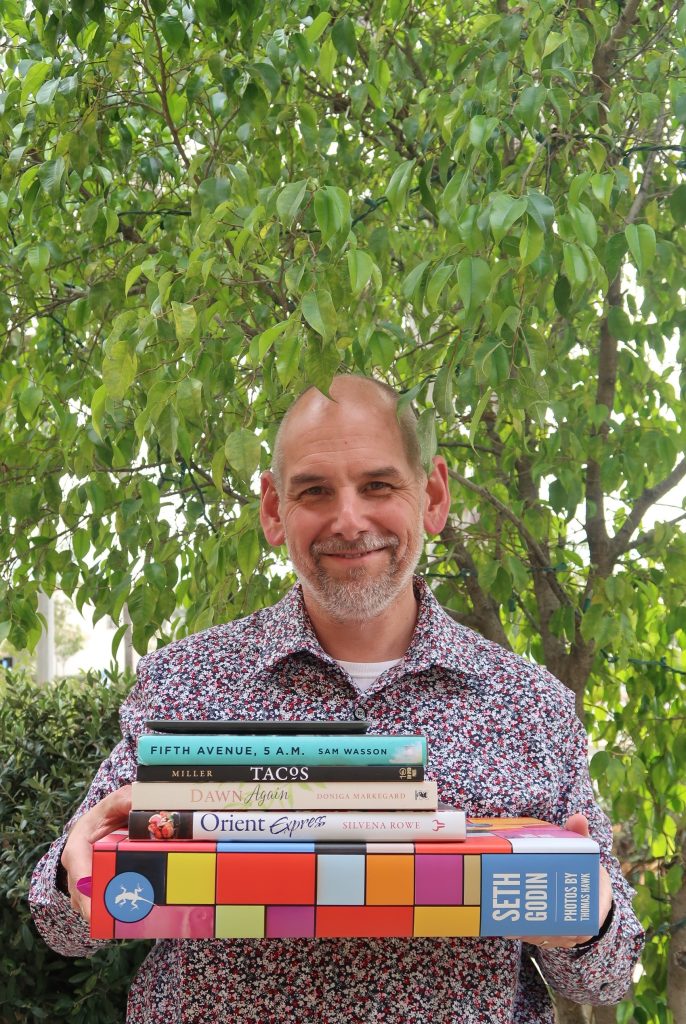
That big book is by Seth Godin, and it’s called What does it sound like when you change your mind? It got it when I attended one of Seth’s talks. It’s really heavy. Fifteen pounds, and because I didn’t know I was going to get it, walked to his talk. That meant I had to walk back. With the book. A couple of miles. That, my friends, is nutritious movement. The perfect spring workout. By the way, the book is so big and heavy that we put if on a book stand like it’s the Bible or a unabridged dictionary. We read it every day. It’s all kinds of big.

Next up is Orient Express, by Silvena Rowe. It’s our second cookbook of hers. It’s like if Mediterranean and Bulgarian cuisine had a love child that was extremely photogenic. Totally worth it. The book is filled with amazing fresh vegetables and vibrant spring colors that will probably look brown on Instagram.

Dawn Again was hidden on my wife’s side of the bed, and our ‘spring clean’ brought it forward, so now I can finish it. Good timing, because there so much about the outdoors in there. Spring is the perfect time for the inspiration.

Tacos, by Mark Miller. This gift from Galina has an amazing recipe for Tacos Al Pastor. I love everything about tacos, Galina, and al pastor.

Fifth Avenue, 5 a.m., by Sam Wasson. This is all about Breakfast at Tiffany’s. The making of, the angst of, Audrey, Truman, Fred. All of it. In Truman Capote’s book, Holly is a prostitute, and I’m reading this book and I’m like “OMG, I was so blind…” How embarrassing.THEN… we watched again, and I wasn’t blind. Holly is not a prostitute in the movie at all. They made her a ‘society girl’ or something like that. Something that doesn’t really exist, like the fun, jazzy cocktail parties that we wish actually went on all the time in the early ’60s. I’ll probably watch it again soon. I love that movie.

That thing on the top is my kindle. That’s where I keep most of my science fiction and vampire stories. Vampires prefer winter, so for spring, I’ll be focusing on the stars.

Debbie Beane keeps the wheels moving at our sister company Nutritious Movement, but she’s just as big a word nerd as the rest of us.


All of my books right now are centered around growing and exploring, which are often put on hold as the snow piles up around here. We’re still waiting for it to melt (to stop falling, really) so some vicarious living through books is in order. Words for the Wild is my trail-side inspiration, and I’m re-visiting the essays with my kids as we get closer to backpacking season. Closer to the Ground is one I’ve been meaning to read for over a year now, but it starts in the spring (or rather, as the author is Ready For Spring To Start), so now’s the time to begin. California Field Atlas: exploring my home state anew with this beautiful inspiration to travel and be outside. Robbing the Bees is a cool history of humans and honey, as I try to decide whether this is the year we try again with bees. The Earth Speaks is a childhood friend, also re-reading with my kids. Gardening at the Dragon’s Gate is about gardening both the earth and the mind, apropos of spring, and July and Winter is to help me figure out how to grow more than just lettuce and peas in my short Tahoe growing season.


Co-author of Eat Well, Move Well, Live Well Galina Denzel’s stack


My spring reads are the books that point me back to what is wanting to be born or be renewed. Right now, my spring reading shelfie looks like this: Blue Horses by Mary Oliver and The Chaos of Longing by k.y. Robinson—I read and write poetry, and the more writing wants to emerge, the more I find inspiration and company in poetry. There is a discipline in being available to the writing that wants to happen and reading others’ poetry helps me stay open to it. The Book of Awakening by Mark Nepo, as there are beautiful daily encouragements to keep looking out, yet staying connected to looking in. Belonging by Toko-pa Turner is one of the most moving reads I’ve held in a while, and invites us to embrace our deepest nature, and re-remember the skill of belonging and find our way back, both rooted and free. The archetypes in the book, like spring, are eternal and repeating, and invite what is eternal in me to show up. Standout 2.0 is my reminder that I have practical strengths in the world, and is a great teacher in how to show up at work and in the marketplace, with ease and grace, showing my greatest talents. It’s very affirming and has been a great professional companion for me and our work online. And last, but not least, I am re-reading Dynamic Aging—as I have committed myself to support my goldener students and create a local book club for them. I am inspired by the stories and women in the book and am preparing to pass on the spirit of Dynamic Aging—if there is a message of continuous renewal and hope through movement, this book is it.

Co-author of Dynamic Aging Lora Woods’ stack

My reading this spring is Rick Steves’ Portuguese Phrase Book and Dictionary + his Portugal.  Fado music is in my immediate future as my brother and I are backpacking (and driving) around Portugal for 30 days. My most common phrase will be Fala ingles? or Do you speak English?

Propriometrics Press designer Zsofi Koller’s stack


Spring is a time of expansion and movement, and these are all titles, that to me, explore pushing the edges of our current realities. Be it against our social and mental constructs (Fight Club), our gendered boundaries (Women Who Run with the Wolves), our own natural settings and movement (Wild) or the fantastical explorations of the imagination (The Space Trilogy), I love how spring creates new growth and fresh possibilities.

What about you? Are there books  to which you return each spring? Or is there a stack of new-to-you reads just waiting for your attention? Drop us a line in the comments and let us know!

#practicewhatyoupublish and other tips for holiday season happiness from our authors

December 3, 2017 ·

For the last several months, I’ve been participating in a challenge to walk a hundred kilometres in a month, alongside two of my siblings, and a bunch of our childhood friends. This month, the online group in which we report our progress and egg each other on, is called “100 km in Crazy December…We Got This!!”—a nod to the way December seems to zip by in a cloud of twinkle lights and shortbread cookies, with one’s best intentions scattered like so much shredded wrapping paper after a gift-exchange frenzy. Without that kind of external motivation and accountability, I know it’s easy for me to forget I live in a body at all. My month is shaping up to include lots of time at my desk (book rewrites are coming my way this week, plus there’s the work I do here at Propriometrics Press and on Katy Says, the bi-weekly podcast from our author Katy Bowman), lots of time at my sewing machine (making Christmas presents for family and friends, and yes, for myself!), and lots of time in the car (my husband and I drive eighteen hours to see my family at Christmas).

All of this, plus the usual hustle and bustle of the season, could set me up for a stressed out, sedentary month. But I’ve been thinking about the hashtag we use on social media: #practicewhatyoupublish, and I’ve asked some of our authors to share with me—and with you—their best tips. We hope you’ll find some inspiration for your own life here!


Galina Denzel, the co-author of Eat Well, Move Well, Live Well, writes about meditation in that book’s chapter “Meditate on This.” But, she notes, “sitting meditation comes easier in those times when I have relative peace, life is in flow and I am not facing huge challenges. But with the holidays, there is more stress, more expenses, more travel, more preparations in our home. On top of it, we have a special holiday program, and our students need our attention, so technically, we put a lot on our plates.” So here’s how Galina embodies #practicewhatyoupublish:

While our life is rich with many amazing holiday experiences, it becomes harder to wake up and pull my cushion, sit and just drop into what’s in my body. And herein lies the paradox: the times when I most need to attend to my inner world is the time when I am least wanting to do it, because…there is stuff to do. Around this time of year I choose to do walking meditations instead of sitting meditations. It’s a way for me to combine two of my favorite ways to stay connected with myself at a time when walking comes easier than sitting. This way my walk to the store can become an opportunity to drop in and be with myself and attend to emotions, thoughts, sensations, connections that are tugging at my heart. I can do it on my way to or from work. I can do it while walking with my partner.

I usually choose one of three anchors for my walks. On some walks, I choose to attend to my breath, as I walk and become aware of certain thoughts, events, sensations, emotions or connections, I keep my awareness on my breath. This way I have a line connecting my attention to my breath and my whole experience organizes around it. A second anchor may be the ground. As I walk, I feel my contact with the ground—right, left, right, left—aware of the textures under my feet. A third anchor may be the colors around me—as my attention drifts I always come back to the colors and notice here is red, here is yellow. You can choose your own way to organize your walking meditations, and make this idea your own.

Practicing walking meditation is all about setting the right intention and can really transform how you feel through the holidays. To make it easier, I am sharing one of the walking meditations from our holiday program. Have a listen. (http://eatmovelive52.com/walking-meditation/)

Joan Virginia Allen is a co-author of Dynamic Aging:

During the holiday season, I am in the car a lot. Great opportunity to practice head ramping as explained in Dynamic Aging: Simple Exercises for Whole-Body Mobility. For more information on head ramping, check out our blog entry “As Long as You Breathe, Change is Possible” at www.dynamicaging4life.com.


Doniga Markegard is the author of Dawn Again:

Winter brings time to breathe. Winter brings people together to sit around the fire and talk about the season, talk about our dreams, reflect, and imagine the future. I have been thinking a lot about the future. When you have kids it is hard not to. The changing climate, political system, and the rapid pace of tech growth are all subjects to talk about around the fire. There is something about sitting around the fire with other people that brings about a depth of honest conversation that is difficult to achieve in everyday passing.

I recently had the chance to sit around the fire at Wilderness Awareness School while I was on my book tour in Washington. This was the same fire I wrote about in Dawn Again. That was 20 years ago. It has been burning nearly daily since that time. Each year a new group of youth comes to gather around that fire and talk, cry, dance, dream, and imagine the future.

Pictured here, Doniga Markegard and her son Larry teaching Holistic Context-Setting to the Wilderness Awareness School apprentices

Katy Bowman, author of eight books, including Movement Matters:

My books are always about movement—specifically natural movement, transitioning your body to handle more natural movement, and where movement can fit back into your life. When it comes to movement, the holidays can be stressful because with the addition of so many extra “things to do,” the bout of daily exercise is the first to go. For many, it’s the least connected thing to other elements of life and so is the easiest thing to set aside when all the other plans come in.

Katy’s Hiking Advent invitation from 2016

The way I #PracticeWhatYouPublish is to, obviously, keep moving. I choose less convenient methods (read lots of things by hand!) of processing raw or foraged ingredients. I also like to celebrate with movement—to infuse the holiday with movement—so that we can move together (yay Vitamin Community!). I create exercise advents for my social media followers, giving them one exercise each day. I send out a “Week Before Christmas Hiking Countdown” letting our friends know where we’ll be hiking and at what time, and that they (or even just their kids) are invited. We hold a holiday-eve brunch for all our friends, often eating outside and then heading out for long walk down a local trail. In short, I’ve worked to make the holidays ABOUT moving. Movement is not only a great way through which to celebrate, movement should be celebrated. Movement is the gift!

Shelah Wilgus is a co-author of Dynamic Aging:

During the holiday season and any other time, I make sure to calf stretch several times a day. I leave a half foam roller in front of my sink in the bathroom. That way I can do a double calf stretch while brushing my teeth or just washing up. Detailed instruction for doing the calf stretch can be found in Dynamic Aging: Simple Exercises for Whole-Body Mobility.

Alison Bernhoft is the author of Entropy Academy: How to Succeed at Homeschooling Even if You Don’t Homeschool:

I have a couple of Entropy-Busting Ideas which helped me keep the chaos at bay, at least as regards Christmas stockings:  early in the year, I hung up plastic grocery bags, one per child, on a rail in my closet kept exclusively for that purpose. (It’s a short rail, and we have six kids, in case you were wondering.)  As the months passed, the bags filled with odd items that I found on sale, with mementos of some of the trips we had made, maybe a CD from a concert we had particularly enjoyed. Then it was a simple matter to add the traditional English piece of silver money, apple and satsuma in the toe, then fill it up chocolates, brain puzzles, and a giant plastic candy cane filled with M&Ms.

Warning! Once wrapped, small presents become impossible to tell apart! THE ONLY WAY TO FILL STOCKINGS AND STAY SANE is to use different paper for each  child, (but the same paper for all that child’s presents.)

And Alison’s daughter Lorna adds:
The distinctive thing we did that comes to mind is extending the season and acknowledging the Magi by exchanging books on January 6, the Epiphany. Strong emphasis on extending the season!

As for me, I’m excited to apply some of these tips to my December, and I hope you are, too! In my family, we called January 6 Little Christmas, and there was always a special meal, and a small gift for everyone around the table. I loved the way it brought forward the warmth of the season into the new year. From everyone here at Propriometrics Press, may that warmth be your companion long after the last gift is unwrapped and the twinkle lights are packed away.


  • « Go to Previous Page
  • Go to page 1
  • Go to page 2
  • Go to page 3
  • Go to page 4
  • Go to page 5
  • Go to page 6
  • Interim pages omitted …
  • Go to page 10
  • Go to Next Page »
Uphill Books

Uphill Books
Movement Matters

© Uphill Books 2025. all rights reserved.
Design by Lilt Creative.

contact us Uphill Books on instagram

© 2026 Uphill Books. all rights reserved.

Design by Lilt Creative.